
Electronic Circuit Breaker Trip Troubleshooting
An electronic miniature circuit breaker (eMCB) is a device that protects electrical circuits from overloads and short circuits while offering advance protection against ground faults and arc faults. ABB’s eMCBs are equipped with LEDs to provide additional insight into what the circuit breaker is detecting. If a circuit breaker trips, multiple options are available. When resetting the circuit breaker, the LEDs will allow you to determine what the circuit breaker has identified and inform a certified electrician prior to coming on site.
LED trip indications

For electrical projects, always use a licensed electrician. Only qualified personnel who have been trained, understand and follow all applicable safety procedures should conduct any installation, care, use, maintenance and/or troubleshooting of electrical equipment. Failure to follow these instructions can result in death or serious injury.
Overload
Orange to purple
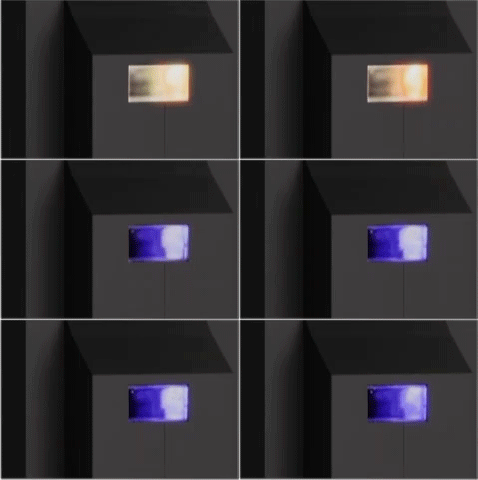
Series arc
Orange to flashing red
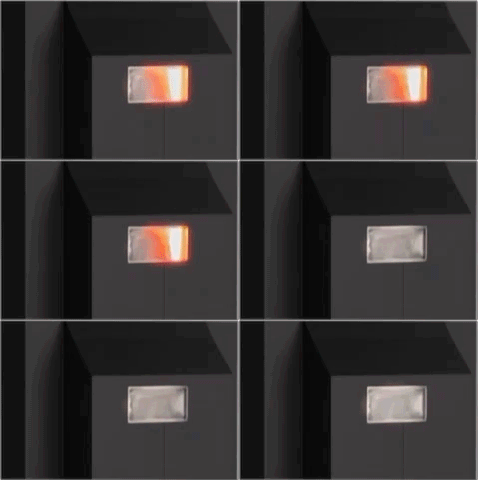
Parallel arc
Orange to steady red
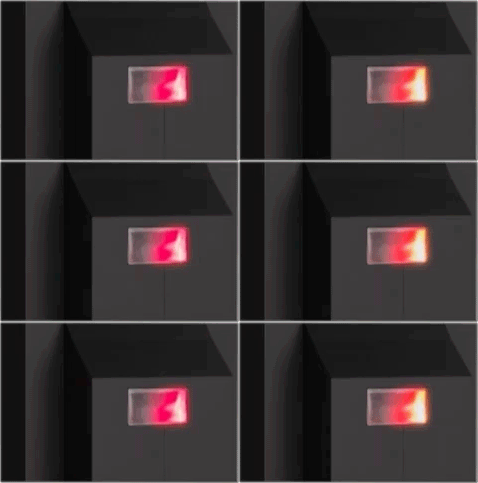
Grounded neutral
Orange to flashing yellow
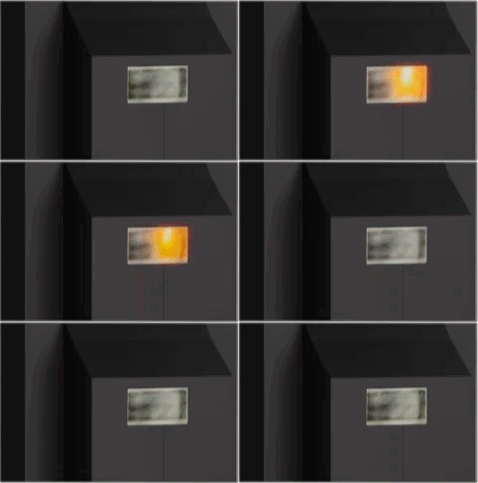
Ground fault
Orange to steady yellow
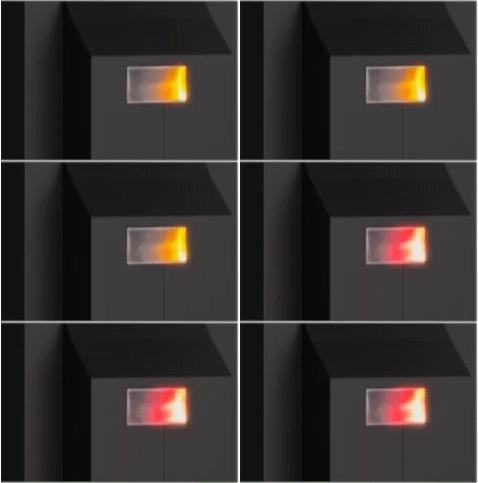
Immediate trip
No light
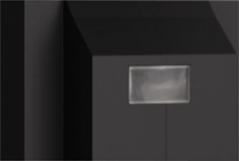
Replace breaker
Flashing yellow and red
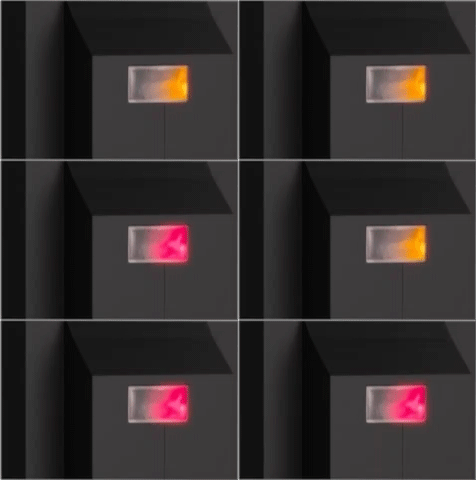
When a breaker trips, something has been detected. Some best practices include:
-
Be sure you are not plugging too many devices into a single circuit and exceeding the allowed amperage.
-
Check all connections.
- A loose connection, such as an untightened light bulb, can cause an arc.
- Look for worn insulation on wires or extension cords.
- Electrical connections that feel warm, appear damaged or have a burning odor should be replaced.
- Check to make sure no pressure is on the plugs or cords of plugged-in equipment. This can damage the plugs.
- Extension cords must be properly tested and rated for the application.
- Never have extension cords in walls, ceilings, floors or doorways to prevent over-heating. -
For electrical projects, always use a licensed electrician.
-
Make sure all installed equipment is Underwriters Laboratories (UL) listed or the equivalent.
Only on GFT2/DX/AX circuit breakers
To reset the LEDs from a previously found fault, follow the steps below.
1. Turn the breaker OFF.
2. Simultaneously hold the push-to-test button in the DOWN direction and turn the breaker ON.
3. The breaker will trip, then turn the breaker back ON.
4. The orange functioning LED will then be present.
Frequently asked questions
What is an eMCB?
An electronic miniature circuit breaker (eMCB) is a device that protects electrical circuits from overloads and short circuits while offering advance protection against ground faults and arc faults. Electronic Miniature Circuit Breaker (eMCB) FAQs
How does an eMCB differ from a traditional MCB?
An MCB automatically shuts off power when it detects an overload or short circuit. Unlike traditional MCBs, eMCBs use electronic components to provide more precise trip settings needed to enable ground fault, arc fault, and dual fault protection.
What are the advantages of using eMCBs?
eMCBs provide enhanced protection against overloads, fire hazards, and electric shocks, while reducing incompatibilities and supporting the demands of modern home electrical systems.
Can I install an ABB eMCB in a GE load center?
Yes, ABB acquired GE Industrial Solutions several years ago and has since continued manufacturing compatible residential circuit breakers under the ABB brand. As a result, many breakers previously sold under the GE name are now available as ABB-branded products and are designed to be fully compatible with existing GE load centers. ABB recommends that troubleshooting be performed by a licensed electrician.
What types of faults can eMCBs detect?
eMCBs can detect overloads, short circuits, and earth faults, providing comprehensive protection for electrical circuits.
Why do eMCBs trip and what is ABB doing about it?
An electronic Miniature Circuit Breaker (eMCB) is a device that protects electrical circuits from overloads and short circuits while offering advance protection against ground faults and arc faults. In environments where appliances generate complex or irregular electrical signatures, an AFCI may occasionally misinterpret normal operation as a fault condition, resulting in tripping. To mitigate this, breaker technology undergoes continuous refinement. Manufacturers regularly update algorithms and firmware so AFCIs can better distinguish between true hazards and normal appliance behavior.
Given the vast and ever changing range of appliances entering the market, this is an ongoing process. As new compatibility patterns emerge, ABB will continue updating AFCI firmware and algorithms to improve performance and reduce incompatibilities.
What should I do if my GFCI eMCB trips frequently?
Frequent tripping may indicate a problem with the circuit or connected devices. It is advisable to check for faulty wiring, damaged appliances, or consult a qualified electrician.
Can eMCBs be reset after tripping?
Yes, eMCBs can be manually reset after tripping, allowing for quick restoration of power once the fault has been addressed.
How can I troubleshoot an eMCB?
ABB recommends that troubleshooting be performed by a licensed electrician. Troubleshooting an eMCB involves checking for visible damage, ensuring proper connections, and testing the device according to the manufacturer's guidelines. Please check the installation manuals.
Where can I purchase ABB residential circuit breakers?
ABB residential circuit breakers can be purchased through authorized suppliers like electrical supply distributors, online retailers, or home improvement retailers.
Resources for certified electicians
Tools and training
Interactive Electronic Circuit Breaker Tripping Guide
Electronic Miniature Circuit Breaker (eMCB) FAQs
Videos
How to Install ABB’s Plug-on Neutral Arc Fault
Circuit Interrupter (AFCI) | Residential Safety
Publications
AFCI Installation Manual
GFCI Installation Manual
DFCI Installation Manual
Post Sales Service Warranty
1-888-437-3765 | 8 a.m. - 5 p.m. eastern

This resource is provided as a supplement to the product installation guide and should be used in conjunction with those instructions, which should be read and understood before beginning installation. The information in this guide is not intended as a substitute for the product instructions nor as a substitute for adequate training in the installation, care, use and/or maintenance of the product or electrical equipment in general. Only qualified, competent personnel who have been trained, understand and follow all applicable safety procedures should conduct any installation, care, use, maintenance and/or troubleshooting of electrical equipment. Disconnect power before conducting installation or maintenance on any electrical system. Failure to follow these instructions can result in death or serious injury.